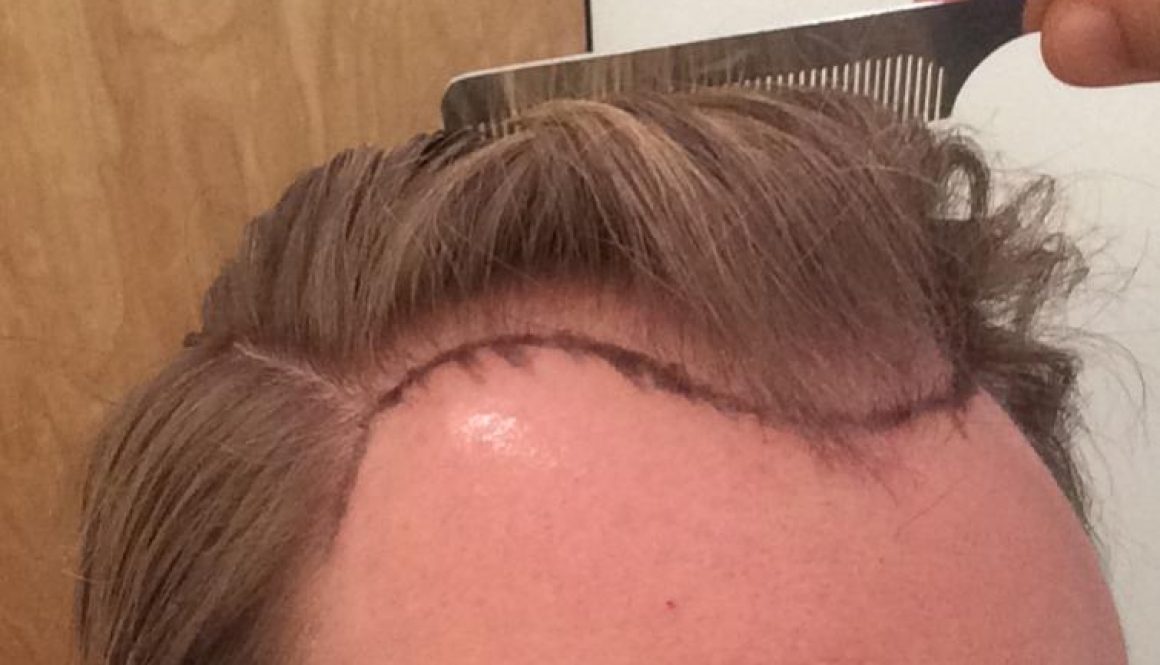
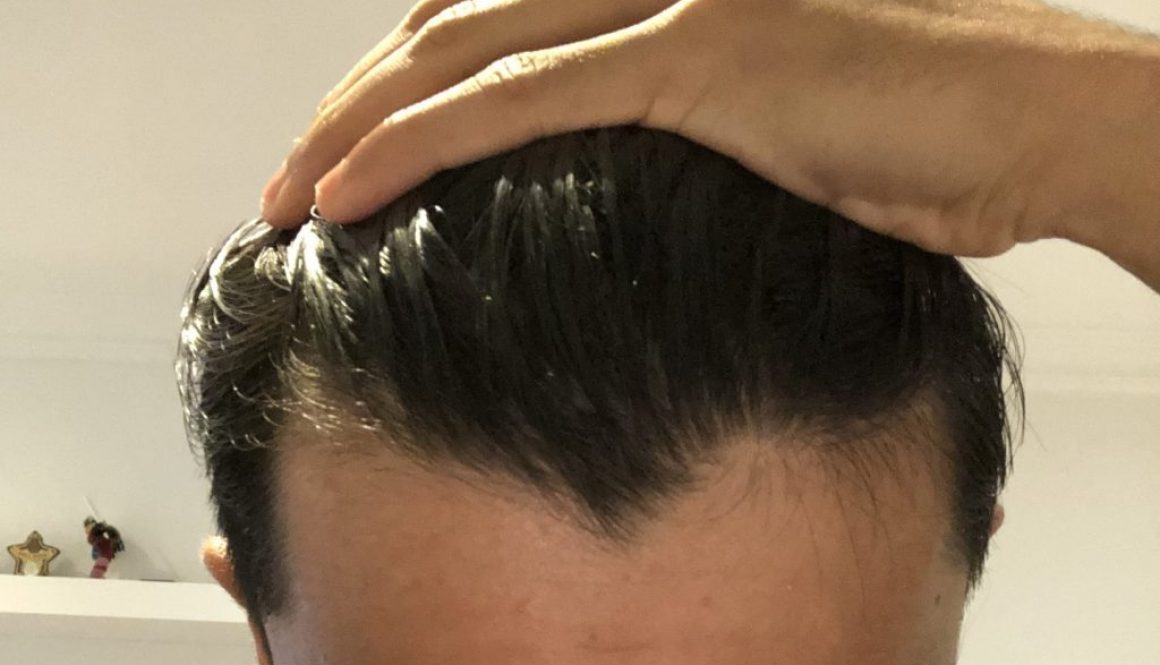
I had a follicular unit extraction (FUE) hair transplant exactly 7.5 months ago. It was all in the hairline and front of my head and I had 50 grafts per square cm density: a total of 4000 grafts.

Around 4 months post-op, the hair started growing very fast and very good and at 6 months I had a great result. More than I had expected (I was totally bald in the hairline and behind). However, on the left side of my head (hairline and behind) I can see the density is about 20 or 30 percent less than that of the right hairline. This was the case ever since the hair started growing at 4 months. I thought this would change at around 8 months but it seems the situation is still the same. The density on the right side is very good and more than I would have ever dreamed of, but this problem on the left side is making me concerned and it makes the hairline look a bit unnatural due to the difference. Also, a very small area of about 2 sq. cm on the front of the hairline on the left hadn’t seen any hair growth but very few hairs I can see.

What do you think the problem is? Can I expect to see more growth a few months later? Do you think the left side will see more density in few months? Do you think the left side is not getting good blood supply? Is this normal at 7.5 months?

Dr_MwamabaOnly a select group of hair restoration surgeons who regularly produce excellent hair transplant results are invited to join the ranks of the Coalition of Independent Hair Restoration Physicians. To see our demanding standards for the Coalition, click here.

Recently, we sought your input about the potential Coalition membership for Dr. Patrick Mwamba of Belgium. Given the accolades he’s garnered from hair loss forum members regarding his results, we’re not surprised that the majority of the feedback we received regarding his potential inclusion was highly supportive.

To see what our members are saying, visit the discussion topic “Potential Coalition Membership for Dr. Patrick Mwamba of Belgium“.

Dr. Patrick Mwamba performs ultra refined follicular unit hair transplantation (FUT) via strip harvesting and follicular unit extraction (FUE) and has the experience and staff to perform sessions exceeding 3000 follicular units when appropriate for the patient. To see examples of his ultra refined results, visit his recommendation profile on the Hair Transplant Network and the “Results Posted by Leading Hair Restoration Clinics” forum.

Given Dr. Mwamba’s experience and dedication to innovative hair transplant surgery, we’d like to congratulate Dr. Mwamba on becoming our newest member of the Coalition. You can view Dr. Mwamba’s Coalition profile by clicking here.

Thanks to everyone who provided their valuable feedback regarding Dr. Mwamba’s potential Coalition membership. You are encouraged to congratulate him by visiting his potential coalition membership topic above.

Onwards and Upwards,

This question comes from a member of our hair loss social community and discussion forums

Recently, I scheduled hair transplant surgery, and I was surprised to hear the doctor recommend that I start finasteride (Propecia) and minoxidil (Rogaine) as well. If I’m fixing my current baldness with surgery, why would I take preventive hair loss medications as well?

Rogaine and PropeciaThis question brings up several very important points about hair loss, hair transplant surgery, and the comprehensive treatment of thinning hair.

Hair loss (specifically androgenic alopecia or genetic patterned hair loss) is a progressive condition. This means that an effective treatment for hair loss involves two important steps: halting the progressive thinning of hair and regrowing/restoring the hair that is already lost. Hair transplantation is an excellent treatment for restoration the hair that is already lost, but it does not treat progressive hair loss. If hair is transplanted to one region of the scalp, but no preventive treatments are started, the rest of the hair around the transplanted region is likely to recede. If the rest of the hair around the transplanted hair is lost, the remaining implanted hair will be surrounded by bald scalp, and this creates an unnatural appearance.

In order to avoid this phenomenon, hair restoration physicians usually recommend preventive hair loss medications like minoxidil (Rogaine) and finasteride (Propecia). If these medications are taken in conjunction with hair transplant surgery, the transplanted hair will fill in the gaps where the hair is already lost and the medications will prevent the surrounding hair from falling out. What’s more, the preventive medications may also thicken the remaining hair and cause some potential regrowth of hair that was previously lost.

This question, from a member of our hair loss social community and discussion forums, was answered by Coalition hair transplant surgeons Dr. Ron Shapiro and Dr. Glenn Charles:

During a recent hair transplantation consult, the physician told me that he will create an “irregular hairline” during my hair restoration procedure. However, I’m wondering why he would chose to do that? Wouldn’t a straight hairline look better? Why create an irregular hairline during hair transplant surgery?

Shapiro HairlineThe goal of any hair transplant procedure is creating natural, realistic results. A very important aspect of achieving subtle, realistic results is recreating a natural hairline. Though many individuals assume that hairlines unaffected by hair loss are straight and regularly shaped, this is not the case. In fact, in order to create a realistic hairline, hair restoration surgeons must utilize an irregular, “zig zag” design.

In fact, according to Dr. Glenn Charles:

The term we often use to describe the hairline approach is creating a “regular irregularity.” Meaning there has to be a certain degree of randomness to give a natural appearance. However, there also has to be some method to the madness. You could also call this “Zig Zag” hairline design.

Dr. Ron Shapiro agrees, and said the following:

This question, from a member of our hair loss social community and discussion forums, was answered by Coalition hair transplant surgeon Dr. Carlos Wesley:

Does Propecia (finasteride) work better on patients in their 30′s vs. other age groups?

0_1284According to a study of 118 men (range 20 – 61 years old) with androgenic alopecia (AGA) from 2011, patients over 30 years old with higher AGA grades demonstrated more improvement than their younger counterparts with a smaller degree of hair loss.

This is currently the longest investigation of finasteride 1mg (Propecia) efficacy. I should also mention that side effects were reported in 6% of patients (decreased libido and erectile dysfunction). Persistence of hair growth was not significantly less after ten (10) years versus after five (5) years of therapy.

Dr. Carlos Wesley
—-
David (TakingThePlunge)
Editorial Assistant and Forum Co-Moderator for the Hair Transplant Network, the Coalition Hair Loss Learning Center, and the Hair Loss Q & A Blog.
To share ideas with other hair loss sufferers visit the hair loss forum and social community

Technorati Tags: , , androgenic alopecia, , hair loss,

This comment, from a member of our Hair Loss Social Community and Discussion Forums, was answered by Coalition hair transplant surgeon Dr. William Lindsey:

I’m planning on going for a hair transplant and recently consulted two top hair restoration physicians: both highly recommended on this forum. One recommended follicular unit extraction (FUE) and the other a strip. Both recommended between 1500-2000 grafts.

I’m trying to consider worst case scenarios for both options and am wondering if the scar is poor with the strip, how well does FUE into donor scar work to cover it up if I want to keep a short hairstyle as an option in the future? Has anyone done it successfully?

0_9369Follicular unit hair transplantation via strip is much more consistent at providing good results and unless you are planning on really short hair, our office would strongly suggest strip. Plus, if you are likely to need more hair later on, strip limits the quantity of scar tissue in the donor area.

You can wind up with a bad strip scar from even the best of surgeons, but it’s not common. Just yesterday I saw another 30ish year old with Norwood Class 5 hair loss who’d had 600 FUE’s (more likely 2mm punches) to attempt to rebuild his frontal hairline.  Now he presents for repair of that plus addressing some of the “further back” loss he’s had since that procedure. Well his donor area is all full of scar and we’ll be lucky to get 2500 grafts out of him and more likely 2200 at one setting since there is so much scar tissue in his donor region.

This question comes from a member of our hair loss social community and discussion forums:

Recently, I saw an online article discussing the “vampire treatment” for hair loss. What is the vampire hair loss treatment and is it effective?

DraculaWithin the last few weeks, a variety of online news sources have released stories about the “vampire treatment” for hair loss. In the articles, the authors state that the new hair loss treatment is vampire-like, because it involves the removal of a patient’s own blood followed by injection of the blood back into the scalp. While the title of the procedure is quite dramatic and mysterious, the therapy is actually something that has been used as a hair loss treatment for a number of years: Platelet Rich Plasma or PRP. So, what is Platelet Rich Plasma (PRP)?

Platelet Rich Plasma (PRP) is a procedure where a patient’s blood is extracted and spun at rapid speeds in a centrifuge device. After two sessions in the centrifuge machine, the physician is able to extract a portion of the blood serum (the non-cellular component) that is enriched with platelets (the blood components responsible for blood “clotting” in the body). Allegedly, this platelet enriched plasma contains a variety of growth proteins and growth factors that may revive hair follicles and cause some hair regrowth. After the extraction process, the physician injects the platelet and growth factor enriched plasma into the scalp and informs the patient to monitor for signs of regrowth.

fue fixedFrom May 24th through May 26th, 2013 the International Society of Hair Restoration Surgery (ISHRS) is hosting the second annual Mediterranean Follicular Unit Extraction (FUE) Workshop in Madrid, Spain. The workshop consists of a series of lectures about important topics in Follicular Unit Extraction, FUE question and answer sessions, FUE discussions and debates, and a series of live Follicular Unit Extraction operations.

Because we recommend a number of FUE innovators and experts, several of our recommended and Coalition hair transplant surgeons are participating in the FUE workshop. According to the official program, our hair restoration physicians are participating in the following activities:

During the first day of the workshop, Dr. Jean Devroye, Dr. James Harris, and Dr. Bijan Feriduni are participating in a debate about the anatomy of FUE grafts. Dr. James Harris is also lecturing about motorized FUE procedures and performing a live, 1,000 graft FUE case on the first day of the conference (and hosting a “Q&A” session after the procedure). On the second day of the workshop, Dr. Devroye is presenting a lecture about motorized FUE and Dr. Feriduni is lecturing about manual Follicular Unit Extraction procedures; both physicians are also performing live, 1,000 graft FUE operations at the end of the day. On the third and final day of the workshop, Dr. James Harris is giving a presentation on automated FUE procedures and the ARTAS Hair Restoration System for automating FUE hair transplant surgery.

This comment, from a member of our Hair Loss Social Community and Discussion Forums, was answered by Coalition hair transplant surgeon Dr. William Lindsey:

I know that this will sound funny, and it is not a complaint, but it seems like the hair on top is much thicker than my hair on the side. I have been told I have good hair transplant donor hair, but the area that I see scalp when I part my donor region is much larger than, say, if I were to part my hair down the middle. Does this make sense?

My donor part may look like it is a half an inch wide or more, and my hair parted down the center may only be a quarter on an inch. I will see my hair restoration physician sometime this summer and talk to him about it but, until then, I was wondering if this is normal at all. It just seems like my donor is thinner than my non donor, or I could be OCD and over analyzing things? Any thoughts?

0_9369I’d guess that in 40% of the follicular unit transplant (FUT) strip cases we do that the hair is noticeably thinner on one or both of the sides than in the middle or up higher on the head. Then throw in a guy with salt and pepper hair and it can really get dicey as to how many grafts you’ll get from a typical strip.

Due to its less invasive nature and modern approach, Follicular Unit Extraction (FUE) hair transplant surgery continues increasing in popularity. As patients continue requesting FUE procedures in large numbers, hair restoration physicians have begun explaining their FUE philosophy and describing how they practice the procedure.

Recently, Coalition hair transplant surgeon Dr. James Vogel decided to take part in this ongoing trend and shared his Follicular Unit Extraction philosophy with our hair restoration community. According to Dr. Vogel:

Dr_Vogel_photoI have been  performing FUE donor harvest technique for the past three and a half years.  My  philosophy has been never to be the first on the block to try new techniques on my patients; however when a new technique or procedure is proven safe and effective I embrace all new technology in a comprehensive manner.  The development and refinement of FUE is a perfect example. 

My  approach to FUE donor harvest is identical to the way I  manage all aspects of the transplant.  I am  extremely “hands on” and  intimately involved with every aspect of the procedure.  I have  tried numerous methods for FUE harvesting over the past several years. The current FUE device I  prefers to use is the Alpha Graft Unit. This is a simple FUE device that offers easy angulation and  adjustment to enable alignment with the  plane of the follicular unit as they exit the scalp.  Tumescent saline is used in the donor scalp to “straighten” the follicular units to maximize extraction and minimize transection of grafts.  Click here to see a video of my FUE extraction. 

Next Page »